Metadata-First
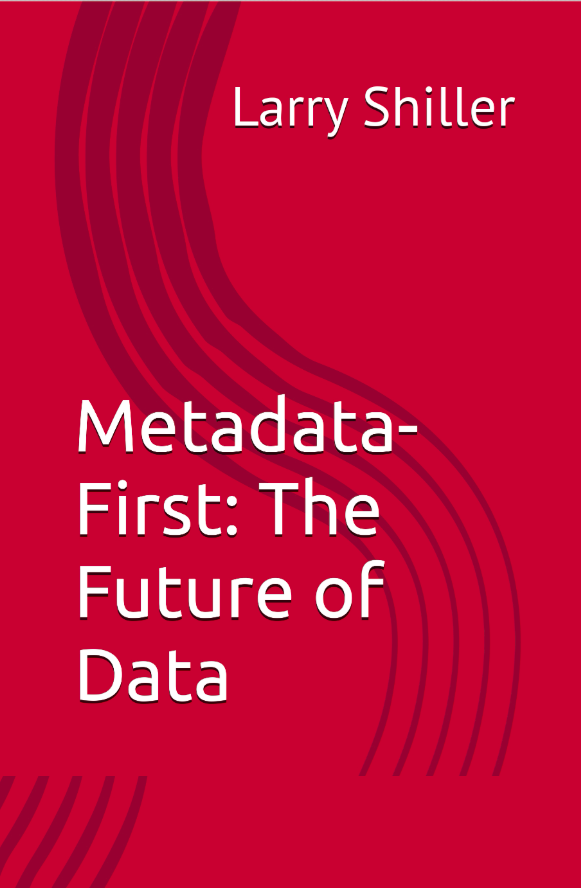
Help your leaders, managers, developers, and engineers transform their productivity with Metadata-First: The Future of Data, available on Kindle.

Our Thesis
Traditional metadata is often outdated and unreliable. Metadata-First makes metadata the driver of all data-related processes, enabling non-contentful code that relies on metadata to guide its behavior, which reduces complexity, lowers costs, and improves AI agility and fitness:
- Metadata-First puts metadata at the center of data strategy, driving operations, quality, and governance
- It replaces outdated, siloed documentation with active, authoritative metadata
- The approach reduces complexity, lowers costs, and improves readiness for AI and analytics
Adopting Metadata-First is more than a technical shift: It’s a change in mindset. Organizations that embrace this strategy position themselves for greater competitiveness, resilience, and AI-readiness and innovation in a data-driven world.
What readers say
For any data professional who has wrestled with the gap between what the DMBOK recommends and what organizations actually achieve, Metadata-First offers both a diagnosis and a credible path forward. Shiller makes a compelling case that metadata belongs at the center of the data management framework, not as one spoke among many, and backs it up with practical architecture, real-world use cases, and a layered structure that speaks to executives, managers, and engineers alike. This book does not replace the body of knowledge. It gives you a mechanism for making it operational. Read it with an open mind and a highlighter.
Lisa Castellino-Gergich, Ph.D.
What the world needs now is as much enlightenment about metadata that it can get – that’s why you should take a look at Metadata-First.
Bill Inmon, Author
Along comes Larry Shiller with an idea he calls “Metadata-First” with the recommendation to put metadata at the nexus of everything you do. A sort of central command center for operations. I view Metadata-First as a big, important step in Zachman’s direction. Most data is meant to be shared. In an analogy to the Industrial Age, data is the “interchangeable parts” and metadata the instructions for interchanging them. Today, the data space needs lots of fresh thinking, the courage to try new ideas, and the integrity to cast out those that don’t work. In his book, Shiller lays out the full range: from vision, to underlying principles, to actionable first steps.
Tom Redman, Author
Inquiry form
Use this form for enterprise inquiries such as workshop availability, consulting, speaking, and/or bulk book orders.
Order single book copies here.